Photography basics, Part 5: What matters when choosing a camera?

When you go to the camera section of a mass-market store, there are so many models that you get lost. This time I want to introduce the point when choosing digital cameras.
Introduction to Photography and Contents
The first aperture and shutter speed.
The second exposure and white balance.
The 3rd Lens Type and Perspective
The 4th the tips for taking a picture.
5th "How to Choose a Camera"
Contents [ hidden display ]
Pixel Number and Sensor Size
think about the number of pixels one needs
The number of pixels required depends on how big you want to print. For example, if you have an A4 size stretched out and printed it, a commercial printing-level beauty would be enough with 12 megapixels. If you don't print so much, then 3 megapixels is enough for you.
not that the higher pixels,the better image quality.
It is often misunderstood, but it does not mean that the higher the pixel count, the better.
If the number of pixels is too high, there’s a downside: you can see that bright areas fly white right away and not in a rich tone.
A digital camera has a sensor in it. The larger the size of that film, the higher pixels you get, but the more expensive your large-sensor cameras are: small sensors—meaning when you try to collect a lot of information (pixels) with smaller area sensors—the less image quality goes down.
The important thing is to balance the number of pixels per sensor size, and if you don’t have a large enough sensor, I think that cameras with higher pixel count than necessary should be avoided because it means lower image quality.
The bigger the sensor, the better it is.
The size of the sensor (the imaging element) is notable in the catalog because it greatly affects photo quality, and the larger a sensor, the richer its gradation from bright to darker, less noise, and more like a single-lens reflex blur.
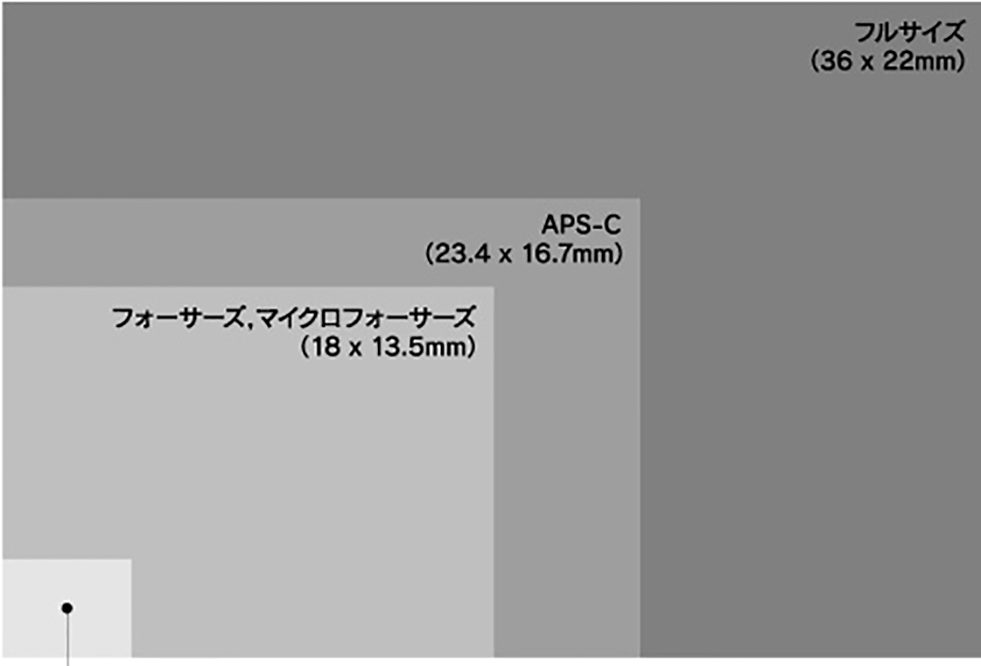
So if you look at a mirrorless lens, NEX-7 ha. APS-C size It's got a bigger sensor (23.5mm x 15.6mm). PEN ha. Micro Four Thirds 3mm x 13mm sensor, which is a little smaller than that.
of Nikon, a high-end DSLR D4 / D800 / D600 or canon's 1D / 5D / 6D and so on. full size It has a large sensor (36mm x 24mm) that is about the same size as 35mm film.
The iPhone 4/4S is: 1/3.2 inch It's a tiny sensor (4.6mm x 3.4mm). Many portable cameras are about this size of sensors, and when you compare the size of each one, it looks like: The bigger the sensor, the better the image quality will be. However, the higher the price is.
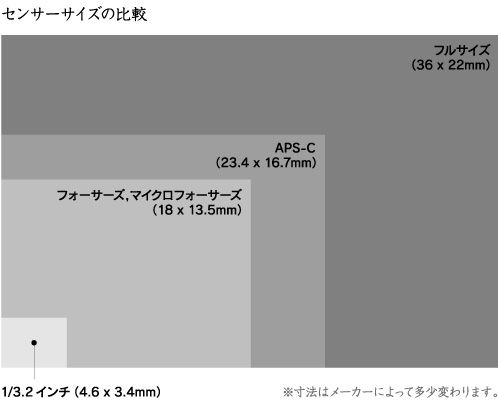
The specifications for the above-mentioned cameras and models are as of October 2012.
What are the lenses you want to use?
As a point of choosing the camera, it is also an option to what lens you want to use: The idea is to choose which manufacturer can use that lens.
For example, if you want to make a blur, use bright lenses (lenses with small F values) that will lead to what kind of photo you want to take.
Lens Brightness = Focus on Open F-value
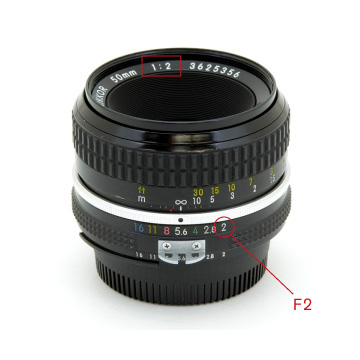
The top lens is a 50mm single-focal lens with the head of the lens labeled 1:2, which means that when you open your aperture it will be F2.
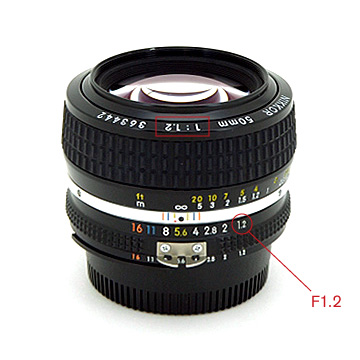
The lens above is a 50mm single-focal lens with the head of the lens labeled 1:1.2, which means that when you open up your aperture it’s going to be F1.2.
This is a brighter lens than the former F2, which means it's easy to make blur.
The difference in the F value here Please refer to the article.
By the way, bright lenses are also expensive because they use a lot of glass. In order to take in too much light, you need to increase the diameter of your lens so that it uses lots of glass. That's why prices go up.
zoom lens pitfall
Zoom lenses are useful, but because they’re hard to capture a lot of light mechanically, brighter lenses (lenses that make it easy to make blur) will be surprisingly expensive.So if you want to take pictures that look like SLR and use blur, I think it is more realistic to choose a single-focal lens.
If you’re used to zooming, a single-focal lens can be inconvenient at first, but if you’re away from the subject it’s better for you. With a 50mm monofocal lens, when you’re away, it’s wider like a wide angle and close by as far as you can see.
If you’re lost in choosing a lens, I recommend 50mm (50mm for non-full size cameras) as the first one.
an option called mirrorless DSLR
A DSLR camera uses a mirror to reflect images coming in from the lens, and then looks at them with a viewfinder. As its name suggests, it doesn't have any mirrors. So how do you look? You see an image taken into your sensor on a liquid crystal screen.
mirrorless weekpoint
At present, however, the speed of focusing with autofocus is still a bit slower than a SLR, so it may feel difficult to use when shooting moving things.But as technology develops and the reaction rate of autofocus increases, I think that it will be attractive in that you can easily get lenses that open up an aperture and make blur.
How was the "introduction to photography" introduced five times?From basic terms to tips on how to take pictures, I would be happy if it could help you in your camera life even a little.