Aiming to be Japan's calmest company: Building a warm team that gets results

I am Oguri, who will be appointed as Chief Culture Officer of non-standard world.
The Chief Culture Officer is responsible for creating an internal culture.
and our company
- have telecommuting in place
- we've got more new employees since this fall.
- Thankfully, I've been busy with many requests.
For these reasons, we decided to establish a CCO in order to create an atmosphere that is easy for us to work with the vision of “aiming at becoming Japan’s most peaceful company.
That said, it was only recently that I learned of this position myself.
When Kenji said, "I want you to be a CCO," I was like, "C○O is an amazing guy..." (Laughter)
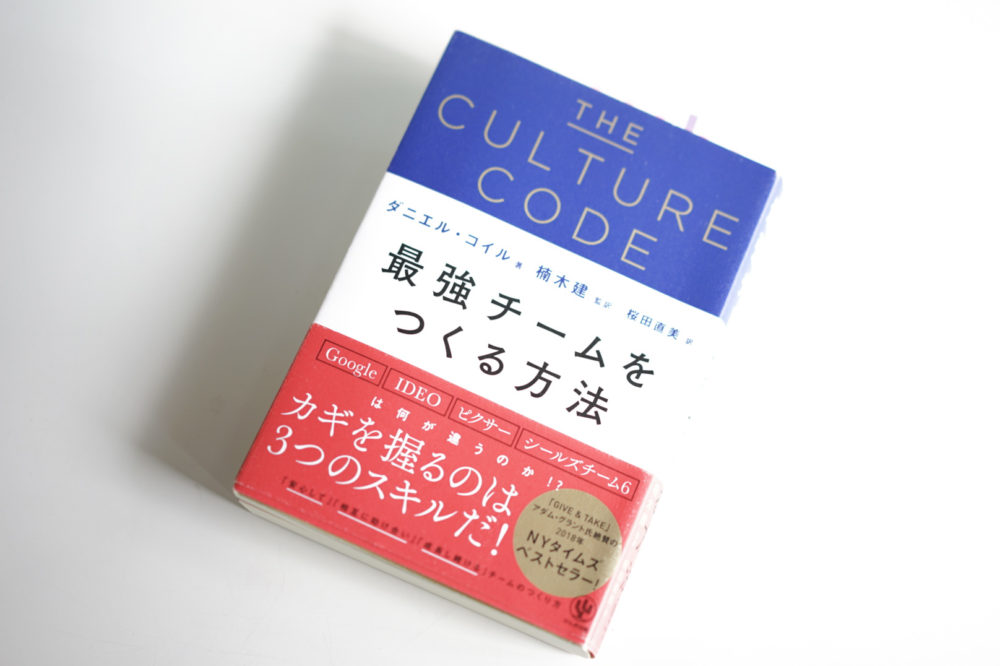
This book was handed over to me as an issue book.
Although it is a calm company, the strongest team ...??I read while thinking about it and I came to see "a team image that warms up and produces results" different from the image of "the strongest".
In the words of obi, How to Create a Safe, Mutually Helping and Growing Team 。
In this article, we will introduce the summary of this book.
Contents [ hidden display ]
What is in common with successful teams?
How do you create a successful team?
No matter how many talented people come together, it becomes difficult to fully demonstrate their abilities if the atmosphere at work is sluggish or they do not feel the significance of their work.
But if each person’s motivation increases, “I want to do my best for the team,” it will multiply their strength.
To do that, "Creating a safe environment," " Showing weakness," and "Have a common goal." This book tells us that three things are important.
1. Creating a safe environment
They say that people can achieve higher results in a reassuring environment.
However, the reality may be that there is a feeling of loneliness in the team and anxiety about "Is it okay to say this?"
In fact, these are due to human instincts.
The brain’s amygdala is constantly monitoring for danger, and when it detects the risk, stress hormones travel through your body into “fighting or running” mode—which creates team discord.
But in a recent study, Amygdala exercises its power to establish and maintain social bonds when it feels a sense of belonging I know that.

So what can we do to create a sense of belonging?
This experiment was introduced.
=======
One person in the room is required to work on a difficult puzzle.
After 2 minutes, you will be given a note.
Steve, who is doing the same puzzle, wants to teach you the tips.
The result is that certain parts of the brain become active, motivation increases and time spent working on puzzles increases by 50%.
=======
The memo does not contain any information about the puzzle.
And yet, "Somebody cares about you." Just by receiving a message, “I’m not sure what I want to do.
Keeping the message “this is a safe place, we’re connected” consistently increases our sense of belonging to the team.

2. Showing weakness
When faced with a problem, successful teams are naturally cooperating and trusting each other.
So, In order to build trust, What should we do?
This book explores the commonalities of highly trustworthy teams: moment of weakness That's what he says.
Have you ever had an experience when someone told you about their weaknesses or shortcomings, and they were motivating to get a sense of familiarity at once?
In an experiment described in the book, people who spoke to a cold audience increased their level of cooperation with others by 50%.
There’s also an experiment where the software crashes near completion of a task.
Participants who were helped by someone have become cooperative not only with the person who helped them, but also others.
When you feel that you can't do it alone, people try to trust others.
instead of being able to show weakness because you trust them show one's weakness and give birth to trust 。
It’s important to note that the way you receive your weaknesses when they are shared, as well as how you disclose or try to hide them will change significantly.
Teamwork becomes stronger by sharing a message that “I have weaknesses and need help” with each other.

3. Have a common goal
Successful teams have thoroughly clarified their common goals.
and the future of our ideals. Repeat and share. That way, members can act towards their goals.
An interesting example was introduced.
=======
One call center worked to raise donations for colleges, but the performance of staff has not been improved.
So, I invited students who received the donation as a scholarship and asked them to talk about "what kind of person they are" and "what kind of student life they live with thanks to the scholarship."
That’s 142% more time for employees to make phone calls, and 172% more revenue.
=======
Even though the work content and salary have not changed, "meaning of working" has brought about a big change for employees.
In this way, when you feel the connection between your current job and the future that you are aiming for, the motivation of members increases.

"It's an ordinary person who fires a strong team engine."
What impressed me most about this book was the case of Bell Laboratories, which at that time were a center for global innovation.
The commonality of the researchers who jumped through and produced results was surprising.
That’s because I was having lunch with the quiet engineer Harry Nyquist.
While there are many unique and eccentric genius scientists, he was too ordinary to be a soft, diligent common sense person.
However, the warmth and curiosity of a person who cares about people around him and loves questions; his presence has been a source of motivation and inspiration for others.
This book covered a number of successful teams, The team was empowered not by advanced skills or strong leadership, but rather with a little bit of sloppy, yet steady “I care about you” message. It was.
thankfulness
the act of listening intently without interrupting another person
attention to whether everyone is making a statement)
I'm sure there are moments when everyone asks, "Is it okay to work in this way" or "I wonder if this job has any meaning?"
At such times, I hope to create a company culture where you can feel that "I am glad to work hard" and "I'm happy to do my best".