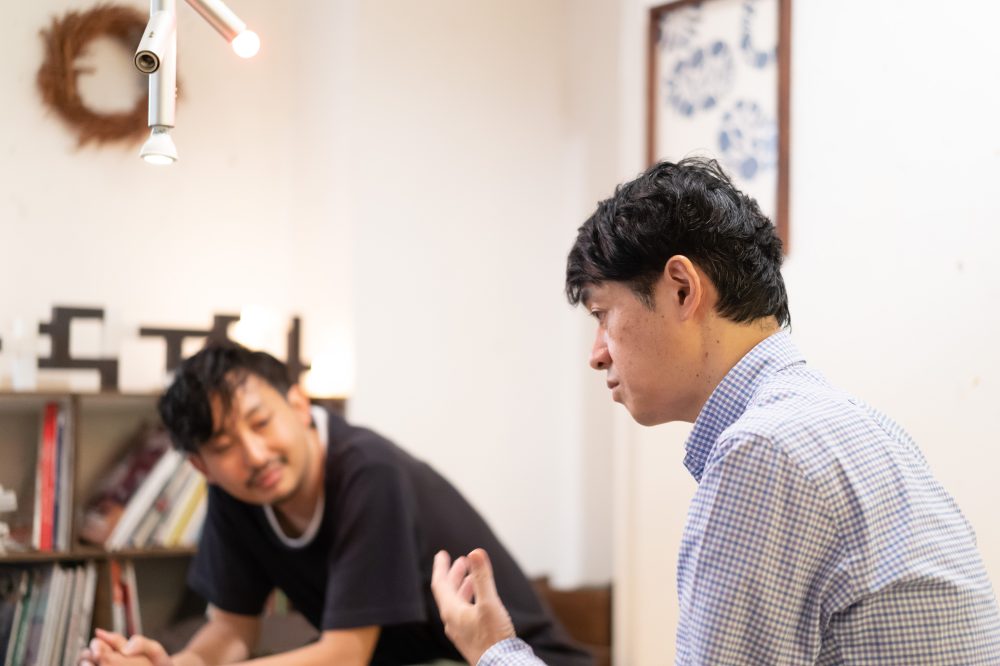
Beyond the limits of self-teaching: Full-stack engineer Naoki Ota's 30-year journey — A conversation with our new technical advisor, Part 1

Hi. I'm the engineer Kawashima.
this article that we published last week but as i've explained, from July 2019 onwards we will be our technical advisor OTA System Development Co., Ltd. Mr. Naohiro Ota, CEO of the company, has been inaugurated.
On the occasion of this appointment as a technical advisor, we invited Mr. Ota to hold one-on-one discussions with our representative Takasaki and will share the state of the conversation with you in the first and second parts.
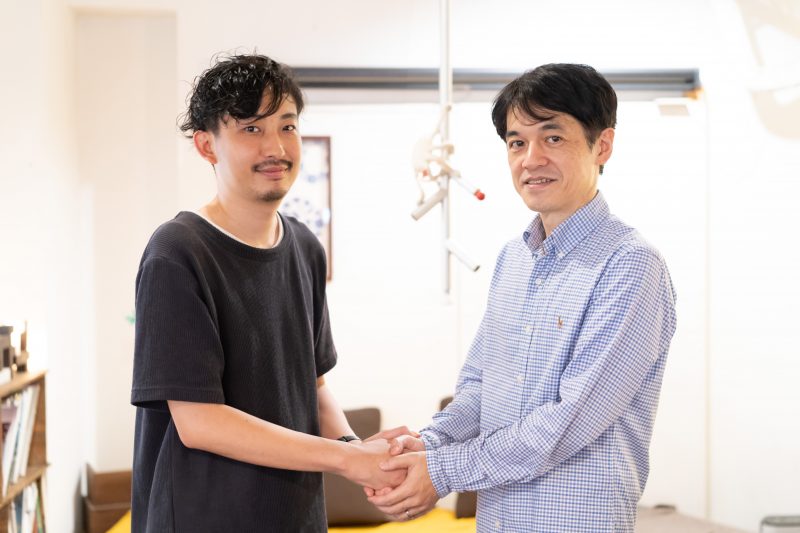
Mr. Ota is a full-stack engineer and manager who has been active in a wide range of fields from databases to web applications for 30 years.
Mr. Ota and Takasaki were originally close friends of old knowledge.
30 years ago at the dawn of Web, we met each other and are working on our current efforts, as well as future prospects. The conversation will spread from past to future.

Today's guest: OTA System Development Co., Ltd.
Mr. Naohiro Ota, Representative Director and Engineer
Born in Sendai in 1969. After graduating from university, he joined a US telecommunications company and helped launch Japan’s first commercial internet service as a programmer.
In 1998, he became independent and worked mainly on the development of web applications.Incorporated in 2017, he established OTA System Development Co. , Ltd. His hobby is family camping.
Contents [ hidden display ]
With the history of the Web.
Takasaki (representative)
Thank you for your time today. Let's start with our meeting.
Originally, Mr. Ota came to my former office as an engineer, so the seats were just next to each other.
At that time, I wasn’t the person who created the web, but my first inspiration was to teach me a lot of things in my work.
From there, even after I became independent and started a company called Nonsta, the relationship has been going on.
Well then, Mr. Ota, could you please tell me your career from the beginning of your career to today?
mr. ota
Yes. I joined a foreign-affiliated telecommunications company after a new graduate.
I was also working on the first Internet service provider business in Japan, but what I had been doing is developing software for banking systems.
When I was a university student, I studied database design and what I learned at that time is still my foundation. Technology has evolved and changed over the years, but I don’t think the fundamental principles have changed so much.
How old were you when you joined the company?
It was 1992.
Oh, just around the time WWW (World Wide Web) was invented.
- Column: The History of the Web
The history of the web, which is now essential to our lives, begins about 30 years ago.
The web was implemented in 1990 by Tim Berners-Lee and others, and it became available on the Internet in 1991; Japan's first home page was released in 1992.
Right. There was only one browser at that time, Mosaic, and there were no HTML documents in Japanese... But the web was still very shocking, and I was excited about how the PC might become more widely available. It was fun.
Does the start of your career in that period have any influence on Mr. Ota?
The timing was great, I've been able to experience the origins of a lot of things around the web, and I think that my career has begun in an era where we can better understand how the web, which is so popular today, has been shaped.
I see. The first thing we did was building systems for databases and banks, but you think that the development of a new web has attracted me to it?
After that, it became independent.
Yes, I worked for the company for about five years and became independent in 1998.
Is there anything that has triggered you?
The idea was... that the company would focus on the provider business. That job seemed to be interesting, but I still wanted to develop it.
I also wanted to work on developing web applications, not just system development.
At that time, I thought it was very interesting to start an initiative in the U. S. to create a database interface using CGI as a prototype for web applications, but there were no companies in Japan doing this.
- Column: The History of the Web
There is some overlap between system development and web application development, but what runs mainly on a Web browser is called a web application.
In 1998, Internet Explorer's share of the browser was growing at a time when it needed to be paid for and installed separately. With IE coming as standard on Windows 98, it became easy for anyone to access the web. Both iMac's first release and Google's first launch were founded in 1998.
So I asked my company to let me do the work around application development, and decided that it would be independent.
That's right.
It's interesting to see that web applications are like places for users, or a little bit of an expression—with or without buttons in place and words—that your response changes.
Compared to the work around a database where data is mainly designed, managed and operated, it feels like standing between humans and computers.
Yes. As Takasaki said, I was most interested in the interface between people and computers.
After all, I think that building a system is based on solving people's problems. I think there are many challenges in the work, but it will be someone who has difficulties after all.
I was attracted to people who wanted to make something that would solve a problem.
I see. That's how you've been independent and working on development for a long time.
From the backside of a system, to an interface...to the front side where people actually touch it, you have been a full-stack engineer for decades.
By the way, how long have you been programming?
I've been writing for about 30 years, and I really like to write code so I don't think it will slow down any time soon.
To teach something to people.
As a matter of fact, I've been asking Mr. Ota if he would be a technical advisor for a long time. For many years, you have been consulted with me.
It's not something everyone can do to always be polite, calm and with illustrations. I think we have to do that too, but it is really amazing...
(Thank you) No, no.
That’s not just an answer, but a stance of taking questions and helping us solve them ourselves... One of the reasons why we asked Mr. Ota to be technical advisor is that he was attracted by his teaching attitude.
We are all self-taught people, and we have survived in our late twenties by learning the skills required at that time while working out short delivery times and sudden troubles with instantaneous power.
But it’s time to take a break, and now you can just calm down and look around. I want to learn more about the web and how programming works in a systematic way so that we can build up the foundation of our members.
Mr. Ota has technical skills and many years of experience, and the teaching method is also wonderful, so I wanted to ask for a technical advisor by all means.
Did you see any change in your vision even during Ota’s career, and this is how you received the offer?
That's right. When I first spoke to him, he didn't have an image of a technical advisor in himself yet and thought more clearly about what kind of advice would help him meet his expectations.
Over the next few years, through the exchange with Mr. Takasaki, that image gradually became solidified.
Based on what my seniors have taught me so far, I think that it would be possible to talk about what I learned in my own language.
And this year, when I turned 50 years old, my expectations have changed from people around me.
yeah, management.
That's right. It is also the reason that there have been a few more opportunities for people to feel that my experiences and things I've experienced are useful to someone.
If my experience is valuable, I would like to share it with you and do such activities from now on.
Mr. Ota's current initiatives.
Mr. Ota is currently working on system development and technical advisory work, as well as developing applications that utilize AI.
On this day, I had an opportunity to show you the English conversation app that Mr. Ota is developing.
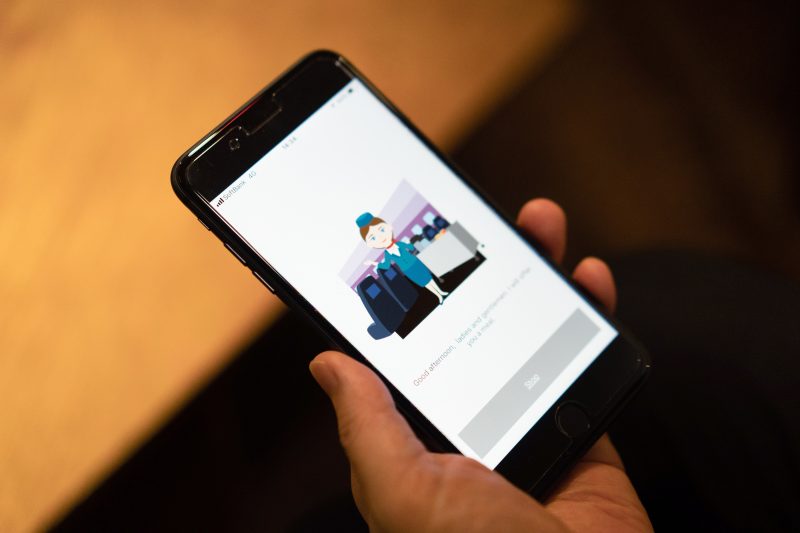
It is equipped with voice recognition, and when you speak English to your smartphone, the scene will proceed next.
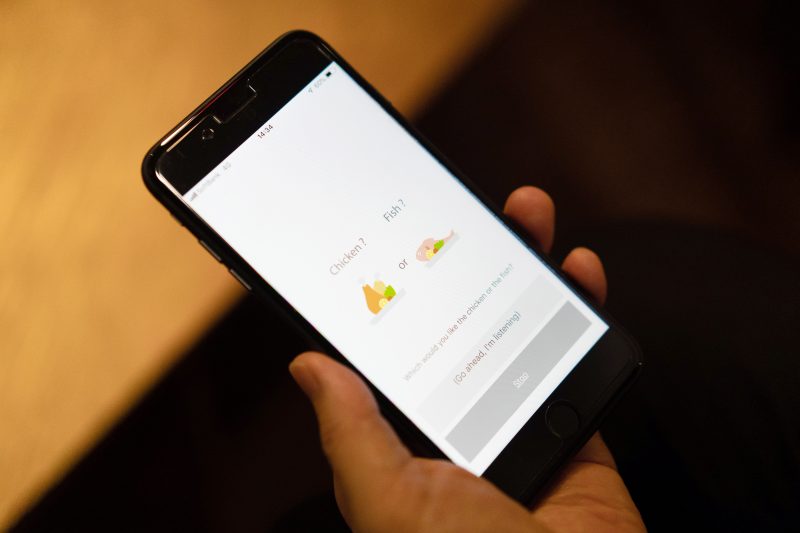
A scene where you order an in-flight meal. What would you say?
The interesting thing about this app is that it doesn’t have one correct answer. Whether you are “Chicken, please.” or “May I has a fish meal?”, the AI determines if an answer is based on context. It feels like real-life, funny:)
After the second!
We are in the middle of an interview, but we will continue to deliver it next week.
The two of us will be even more exciting, and we'll continue to talk about each other's business problems and what they are aiming for. Please go out with me until the end.