
Designing Relationships That Connect Smiles, Part 3: Communication That Reaches the Heart

< last time it's a continuation.
Learning from Creative Director Hiroki Sakai Designing how to engage people with smiles Today, I was given a point of communication to the people involved so that they can act as their own, not others.
Contents [ hidden display ]
1. To convey not only the philosophy but also its underlying principles
"You can't have a relationship that draws out your involvement unless you show them properly. I think it is not possible to do business just by doing beautiful things."
the meaning of this word commercial facility event He spoke about it as an example.
"If you want to create a bustling place in a commercial facility, usually you do things like doing events with your own money. But if local people sympathize with the idea of the place and think about it as their place of activity, then the benefits on the commercial facility side are very great: they can lower costs that have to be paid to build a bustling place themselves or meet new customers who cannot reach them.
For this reason, commercial facilities also need to make efforts such as weakening the color of business, but it is very important to clarify the original purpose and communicate it with collaborators, because you can't trust people who are all good in business."
They say their goals and benefits are so-called undercentered. In the case of commercial facilities in this example, regional collaboration is only a means; it's not a purpose. By discussing its roots, they will be able to understand each other, making it easier for them to talk about specific measures.
Of course, it is important to convey beautiful ideas and passions, but not only that, but showing your hands first seems to be the key when moving people or moving projects.

2. If you're about to hit, change your perspective.
Sakai said, "It may be my job to form an agreement," and found a common goal even in the competitive relationship. Looking for a direction that will be beneficial to both parties, he asks them to hold hands and say "Let's do this," and says it is important to have an indignant point of view.
「 In particular, it's really hard to agree on competing relationships. They have pride and they don't show each other their weaknesses. And in many cases, they hate to propose their own ideas for the benefit of others. So it's not easy to get an agreement.
However, it is my job to find a common purpose from an outrageous perspective, understand each other’s weaknesses and bring strengths and create benefits for both parties. It is my job to search for the best possible drop points and organize communication traffic. That is why I always get stuck between boards (laugh). 」
In a large project where millions of yen moves or various interests are intertwined, it should be difficult to avoid human-to-person collisions. How can you become the bridge between them rather than having to suffer from being caught in a board?
Sakai taught me that when people are about to collide, it is not only a relaxation agent that absorbs both sides’ claims and emotions like cushions but also by changing the perspective well and leading them to say “I think I can draw such a future if I go over there”.

3. elicit involvement
When running a project, there are times when the people involved collide with each other and vice versa, but in some cases it does not move at all.
"At the first class, I think you'll say that most teachers should stop talking to me, but in my case, 'if you agree, nod. If you thought you said a joke, please laugh. It depends on everyone's performance and because I am also human, I can't speak well if I don't feel good. If you cooperate with creating an air of space, it might be possible to pull some information from me."
The word "involvement" is used to describe engagement and giving. It may not only be involved, but it could also be pulled out when you act in an attempt to give something to the other person, and finally set up a starting point for moving things. Whether people who are involved will act as "selfishness."
Mr. Sakai's words are not a clean argument, but rather some kind of human taste that includes funnyness, which may be why they come to people's hearts.

4. maximize one's imagination
When I listened to Mr. Sakai, it became clear that he was a professional of "thinking about the other person's position" and said that this was not his original ability but training in imagination.
"Many people feel that the means are being aimed at. They're underimagined, and their work is operational. I think it's touching to me that there's something beyond 'communication'. We get paid by our customers so we don't have to be in business or professional. For example, a three-star restaurant isn't just an appraisal of taste? I think it's an evaluation of how much imagination you've put into every element such as food, customer service, space to please them."
In other words, what he intends to “transmit” is just an operation and not communication; it’s only when you can move the other person’s feelings that you can call them “communication,” Sakai says. He is conscious of working his imagination as much as possible from day to day in order to enhance his communication skills.
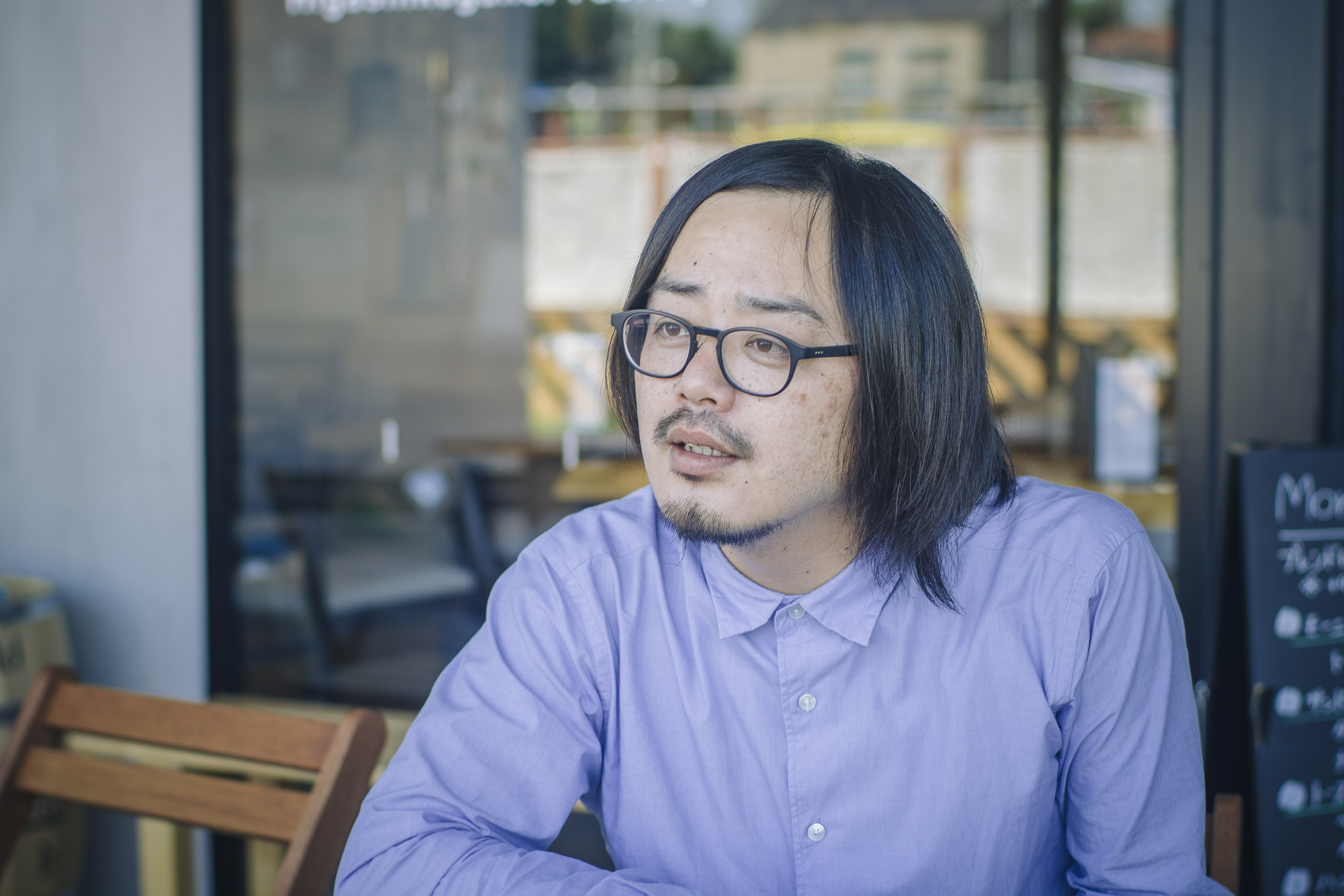
In communication, how do you want the people involved to act? Understand their purpose and have feelings about them. If they can't do that, Sakai taught me with great effort in his words.
It may be that the balance between emotion and reason is important for the communication that moves your heart, which is transmitted to you. The mind of thinking about others and the head of thinking about them both seem to have taught me that “communication” can be “transmitted”.
< follow >