Making things begins when you see something that does not yet exist: The creative process of D2C brand objcts.io

Hi, I'm art director Sato.
On November 30th, I joined “Prototyping and Contextual Design,” which I talked about with “objcts” & thoughts Takram.
objcts.io This event was held at Pop-Up Store and Community Workspace, where we had workshops and a panel discussion to learn various things from.
Contents [ hidden display ]
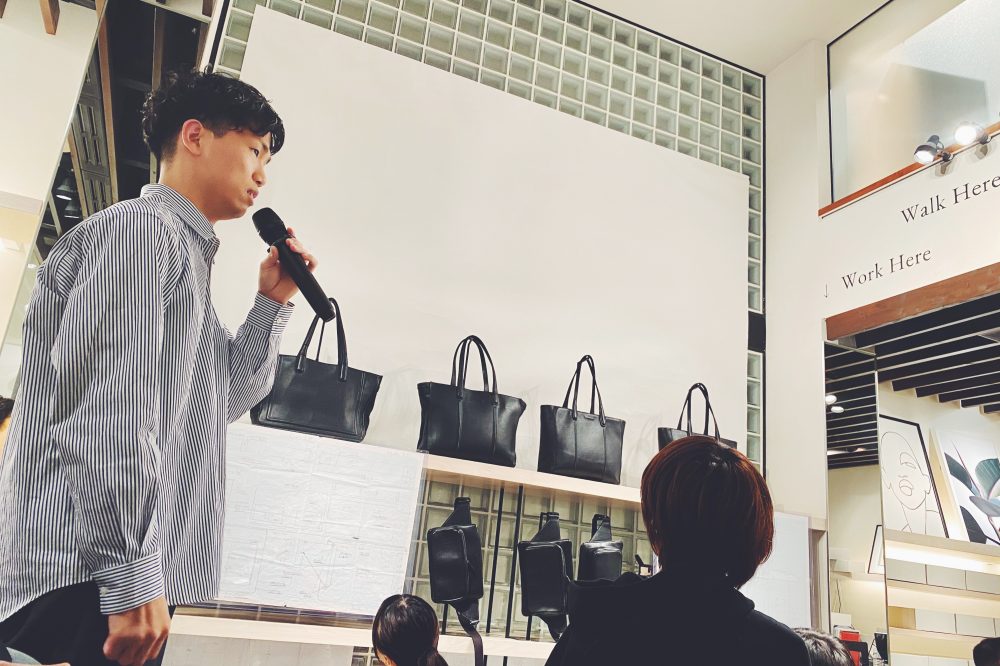
Takram’s Watanabe Watanabe, Ogata and objcts.io are on stage
Kotaro WATAGIRI (Takram)
design innovation farm Takram He is a special professor at Keio University’s SFC, and also works as navigator for the J-WAVE radio program “Takram Radio”, and has been active in many areas as an initiative to create “manufacturing” that creates small things.
→ Mr. Watanabe, Twitter
The Takaram clan
He is director/design engineer at Takram, and a series of notes on the relationship between understanding and creativity. i'll make it. There are many questions asked by readers, with deep considerations that shake the world's perspective.
→ Mr. Ogata: Twitter
Tomoyuki KATSUMORI (objcts.io)
a leather brand for innovators objcts.io A product designer who is responsible for product development of the “Hybrid” brand, we have a product design that combines high-quality appearance and functionality.
→ Mr. Kakumori: Twitter
Manufacturing and Prototyping
First, the designer Mr. Kakumori introduced us to manufacturing objcts.
- To stimulate the sensibility of innovators, there is a feeling that because innovators have an influence on society, it will lead to an indirect impact on society.
- The design drawings for the craftsman are written in real size, with comments from the artisans in a red pen and traces of communication remaining.
- Product development is done by prototyping method.
- Smart Tote The prototype of the Tote Bag took about two years to make around 10, and there are four displays in stores.
- It didn’t work out for the first year, but after setting up a clear persona (Takram’s Sasaki) it became easier to move forward at once and in about one more year it will ship.
Takram’s Ogata talked about what prototyping means.
- Once you know it, repeating the process will make things better; that’s prototyping.
- By making it first, you realize.
- The product includes both How and Why.
- Why (reason) is when manufacturing begins, “when there are things that you only know but not in the world”.
- You can see how when you make it.
- When there is a discrepancy between the image and reality of why you want it to be like this, create something.
- When it comes to discrepancies, rather than easily correcting yourself, make sense of incongruity important. A person who can do that makes things.
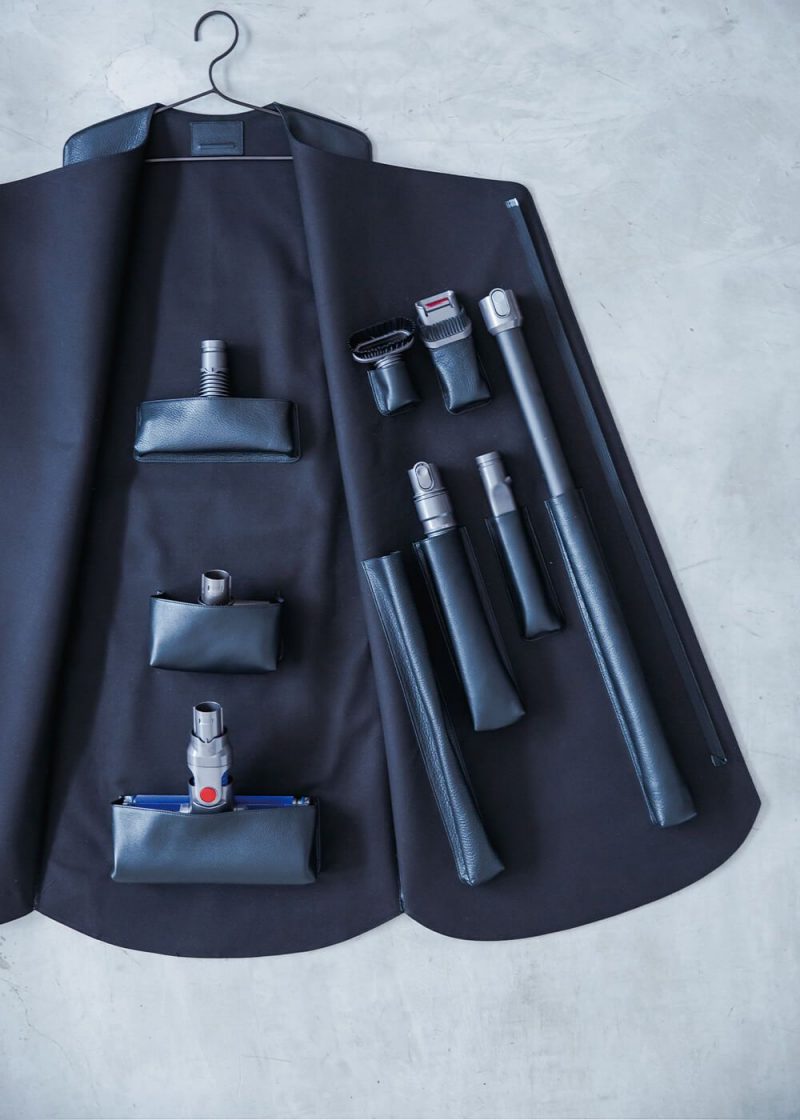
Mr. Kakumori talked about Dyson’s attachment storage case as an effort to gain awareness.
https://objcts.io/products/the-cleaner-attachment-case
- The reason for creating this product is that there are new discoveries in making sharp things.
- That awareness can also be used for ordinary products.
- as a similar approach Mavic Air Bag The core structure of the (drone bag) is also utilized for tote bags.
- The quality of manufacturing will be improved by pretending to do sharp and usually product initiatives in this way.
- We have been working to create concept products since the Tsuchiya Kaoru era.
Each bag and contextual design
Takram Mr. Watanabe introduced three books recommended for each person to experience “things”.
"The National Story Project" by Paul Auster
A novelist selects and introduces the real stories of American consumers, and there is a wonderful story in reality.
https://www.amazon.co.jp/dp/4102451110/ref=cm_sw_r_tw_dp_U_x_bbO6DbF6GHAWM
"The T-shirt that cannot be discarded" by Koichi Miyatsuki
A book that summarizes episodes of 70 T-shirts, and the name is hidden only in stories, regardless of whether they are famous or unknown.
https://www.amazon.co.jp/dp/4480876227/ref=cm_sw_em_r_mt_dp_U_NbO6Db2DS8K0K
"Worn Stories" by Emily Spyvac
A story about the clothes that have been worn, we introduce more than 60 people such as artists and designers by listening to stories about “one piece of clothing you care for”.
https://www.amazon.co.jp/dp/1616892765/ref=cm_sw_r_tw_dp_U_x_acO6Db3HBY3Z9
- I want you to challenge the project of a product for n=1.
- I want this for myself, and it tells me who you are.
- I don’t know what you can get from it, but if we reach a world that doesn’t get there.
- A new meaning of a bag that the creator did not know will be excavated.
On the day of the event, all participants had a Brest with the theme “What I want you to make on objcts.io” and shared various ideas that reflected individual lifestyles and values.
Q&A: How do I interview a user?
When asked about the method of user interview, Mr. Kakumori answered that he did not limit too many questions and interpreted them including the interviewer’s lifestyle.
objcts.io Mr. Kadomori
- Listen to the features and aesthetics.
- If you limit the question item, there is only an answer in the box so listen to it in a conversation.
- Interpret the interviewee’s work style and lifestyle.
- After prototyping, Go’s criterion is to be abstract but “cool” because it can not only be useful but also beautiful and will not bring about any change.
Q&A: How to gain awareness in daily life?
Three people introduced how to gain awareness in everyday life, which could be the starting point of manufacturing, and that you are usually aware by yourself.
objcts.io Mr. Kadomori
- To touch something good.
- I don’t want to know about it on the web, but rather touch things and accumulate experiences; for example, I want to make something functional while having an elegant look like Céline.
Takram Ogata
- In order to increase the resolution of ideas and concepts, we will consider what is the boundary between things.
- For example, what is the difference between humans and non-humans (e.g., evolved AI)?
Takram Watanabe
- think about a seemingly trivial boundary)
- If you change only one of the many elements, there is discovery.
- In tea ceremony, the sound of boiling (pine wind) disappears in a quiet moment and you notice that there was a sound that had been singing until then.
- In order to rediscover it, you need a new space like a tea room; as the environment changes, your appearance will change.
- He consciously performs such movements, including seeing the same movie as a different person.
Summary
io’s world view was expressed in the space, and it is a valuable experience that came from the perspective of prototyping and contextual design.
I recently had an opportunity to think about the relationship between products themselves and background content, but I was convinced that the latter will become even more important in the future.
Making sharp things is also a context for the brand in itself.
Rather than saying that we are targeting innovators who use Dyson smartly, I think it’s the strength of having a product called Dyson Attachment Case, which will make our brand characters more clear.
Also, "Thinking about the boundaries that appear obvious" is Mr. Kengo Hara's. Ex-formation When I thought, “Where is the boundary between a plate and a bowl?” I remembered that the feeling of not knowing what it was about was one step deeper into the depths of design rather than a reversal in perception.
Recommended article:
→ Whitespace in traditional Japanese culture