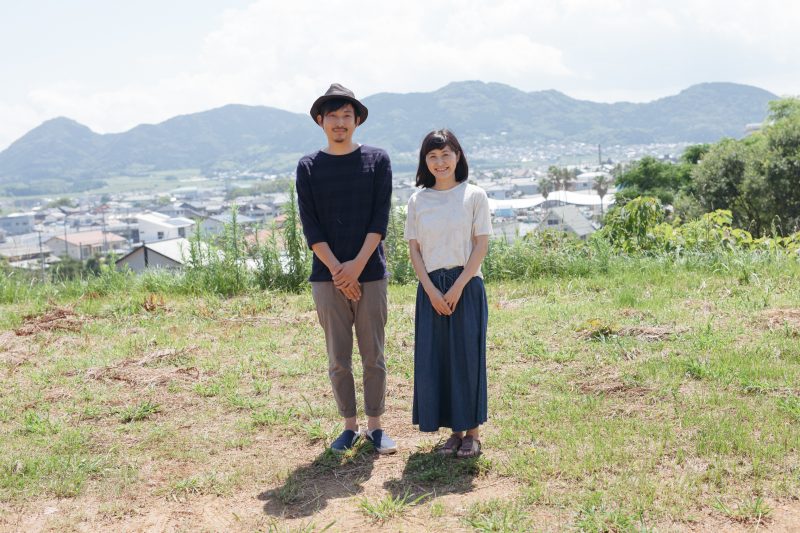
Ending our time in Fukuoka and returning to Tokyo

Hello, I'm Representative Takasaki.
Although our family moved to Fukuoka, we thought about the health of each other's parents and challenges in the future, graduated from the migration life, and will return to Tokyo later this December. I moved to Tsuyazaki, a seaside town in the northern part of Fukuoka Prefecture that started with an initial three-year deadline. But when I realized that it was too comfortable, about 4 years and 10 months had passed.
I would like to express my sincere gratitude for everyone who took care of me.
What I learned in Tsuyazaki
1. Migration is not urban or rural, but two, and there are gradients between them.
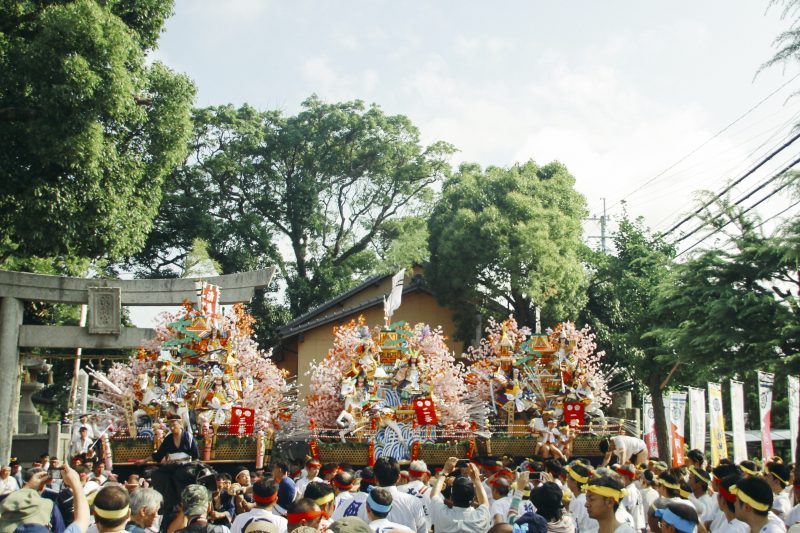
local festivities
The town of Tsuyazaki in Fukuzu City, Fukuoka Prefecture where our family moved is a 30-minute train ride to Hakata.
It was very smooth because I went to the town to look down in advance, my work was OK so I did not need to change jobs and there were friends who had already migrated earlier.
Since it was originally a port town, there were many immigrants from outside the prefecture, and even after we moved to Japan, the population was increasing more and more.Last year I also had an open land pattern for migrants such as the chairman of the town association and the executives of the town council.
I often hear stories on the Internet like “I moved to a marginal settlement and failed!” but personally, if there are many migrants between cities and rural areas, I think that it does not feel like a problem such as closure or privacy ignorance.
If I dare to give you a snag,
- i can't do anything without a car.
- Living expenses other than land and rent are not as cheap as cities (infrastructures like gas or gasoline are cheaper).
- I lived at the foot of a mountain, so insect control and grass mowing are difficult (we also saw boars in my neighborhood!)
But as a whole, it was very easy to live in.
2. The best environment for raising children
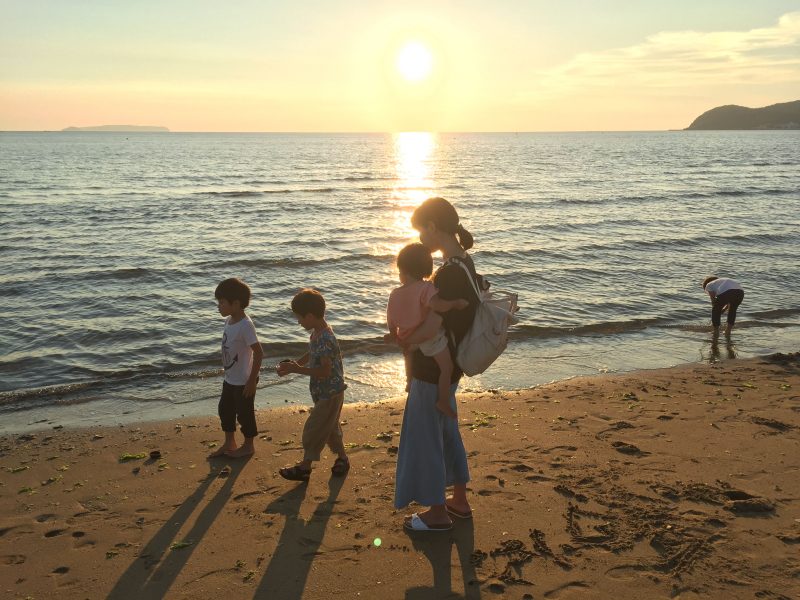
and I walked to the seaand lived at the foot of a five-minute mountain.
The main purpose of the migration was to grow up in warm relationships with nature while children were small, but this was definitely a success.
Since there is a "slanted relationship" with the neighborhood of town, which isn't at work or family, and it is not vertical or horizontal, you can only thank local people who have accepted warmly such as getting their children to be taken care of by neighbors when they are busy, helping adults go to hospital when both are down.
Also, even if I used public transportation with my child, there was never a bad face at all and it felt like there is a culture that cherishes children by talking to the shop clerks at convenience stores or having extra money in the store where I went to eat.
Conversely, I think that our two children also seem to have been very familiar in this town because we sometimes keep their neighbors' children.
3. I was able to see a lot of lively adults.
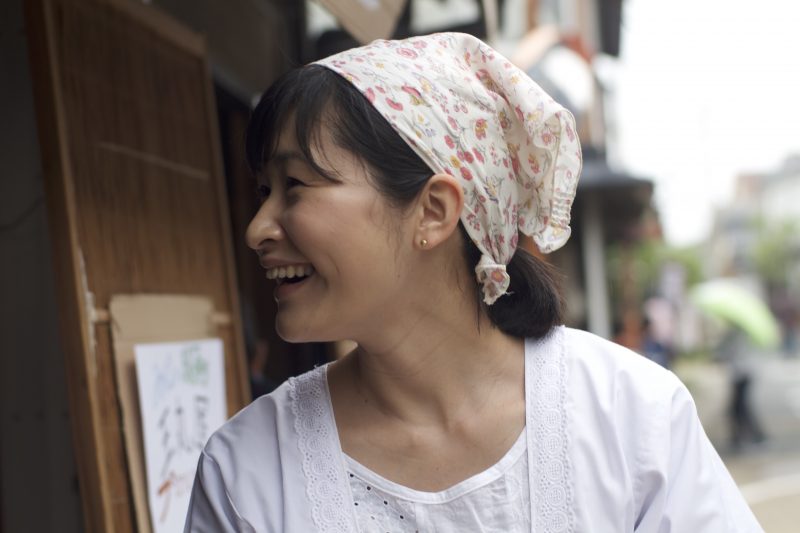
When my wife participated in a town event, I had many opportunities to connect with various people without being too close and not too far away.
Whether at work or private, I was able to meet many people who are enjoying their way.
The president who creates a house that is good for children with care, the leather craftsman who loves living things from the bottom of his heart, Terakoya who cherishes child autonomy, the artisan who runs a woodworking shop using really good materials, real estate agent who participates in town events, architect who specializes in historical and traditional temple architecture, community-based cleaning shop, family which runs cafe where you can see sky.
They were all very diverse and they looked so happy.
Of course, I think that there is a hardship in each of "love" and "easiness".
Including that, I met many people who felt the cleanliness of walking along “the path you’ve decided” as a main character in your life rather than on the rail where anyone laid.
I think that it was really good to see adults living in various ways even for children, and if my annual income is fine with clothing, food, and shelter myself, I felt strongly that "do you decide your own life" rather than money and "do you have a good relationship with friends or family" affect the well-being of life.
Concentrate on “here, now” and walk along the path that you have decided, do not hesitate around even if there is a difficult thing to make your own decision, and build good relationships with others because it’s as good as possible for you.
I feel like you've taught me such a thing.
future challenge
I would like to take advantage of what I learned in my migration life and try the following things in Tokyo.
By helping from easy-to-use UX/UI design to building web applications, we will create a SaaS for business use that supports small and medium-sized enterprises as well as individuals' "paper" and "excel".
It's been 10 years since we became independent of the early ones.
Through a number of trial and error, it is now our company’s mission to “solve clients’ problems across the field of design and technology and marketing.
I saw a scene where the creators who have good sensibility even in the place of emigration could not concentrate on production because they are too much after paperwork, but by doing inefficient office work from consultation to UX/UI design production and actual web application construction at our company, we would like to help those who do wonderful things with nice ideas focus on their original core work.
Specifically, projects such as the reservation system of accommodation facilities that want to advance IT as soon as possible due to labor shortages and the construction of accounting cloud applications are being carried out.
More details: here for more information, too.
and run an event to create a third place that's not a company or home.
As mentioned above, I think that “Is my life decided by myself” and “Is the relationship with others good?” have the most impact on happiness.
In order to do this, I thought it would be necessary for a third place outside of the company and home as in Tsuyazaki town, "to connect with various people gently", so I will start an event like below.
https://www.non-standardworld.co.jp/event/21087/
The first reservation is still accepted, so if you are interested please do not hesitate!
https://www.non-standardworld.co.jp/event/21202/
Finally,
The etymology of goodbye is "Goodbye."
(I don't really want to break up with you, but) if that's the way it is.
I've heard of it.
The origin of the word good bye is God be with ye(you) = God next to you.
And my favorite artist, Sexy Zone (especially Kento Nakajima), sings like this.
the time you spend with someone, the pain for somebody. it's not all about looking back on treasure, but rather the light that will continue to paint the future of innocent days.
-Sexy Zone「 Innocent Days 」
In both Japanese and English, saying goodbye is not only about saying goodbye but also about praying for the future of your partner.
I hope that we will hold both hands what Tsuyazaki received from our migrant life and return it to society in Tokyo, as well as the happiness of those who met here.
Goodbye, and Sexy Good bye!
Thank you so much!