Headless Commerce Summit, Part 1: Headless Commerce, the Future of Ecommerce

Hi, I'm art director Sato.
On September 3rd (early morning of September 4th), we participated in Netlify’s online event “Headless Commerce Summit 2020”, which is a very helpful event to share with you about the front lines of headless commerce that will attract attention as next-generation EC.
Headless Commerce Increases Conversion Rate
Netlify’s co-founder gave the keynote “The Future of EC, Headless Commerce” about the importance of site performance in business.
- If it takes more than three seconds to load, 56% of users will leave
- 20 percent of them will never go back to the site again
- As mobile rates increase, this problem is becoming more sturdy
The first example of this is Teespring, which has doubled its conversion rate by making it headless.
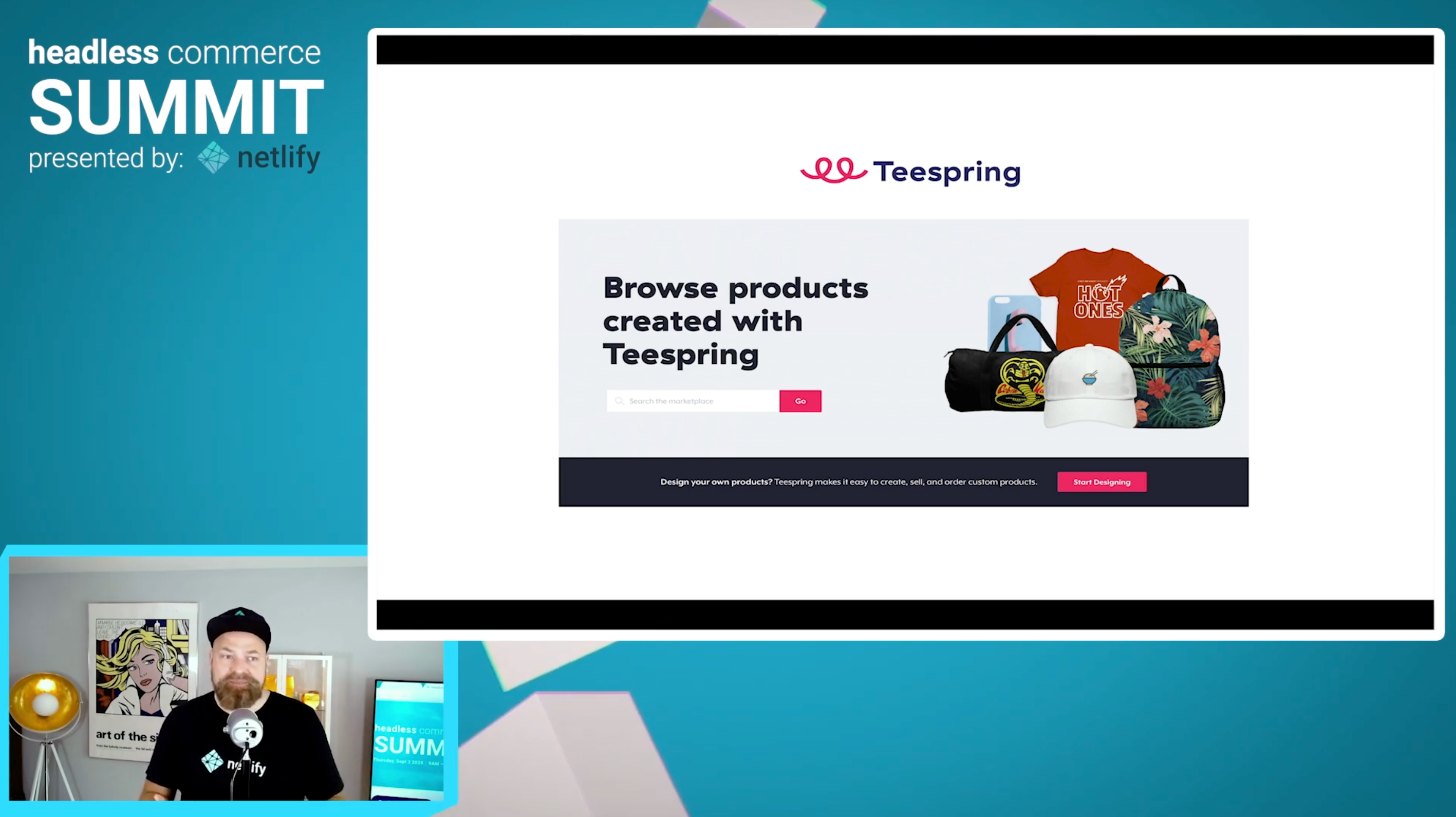
Image source: https://youtu.be/s3hDghdIiFY
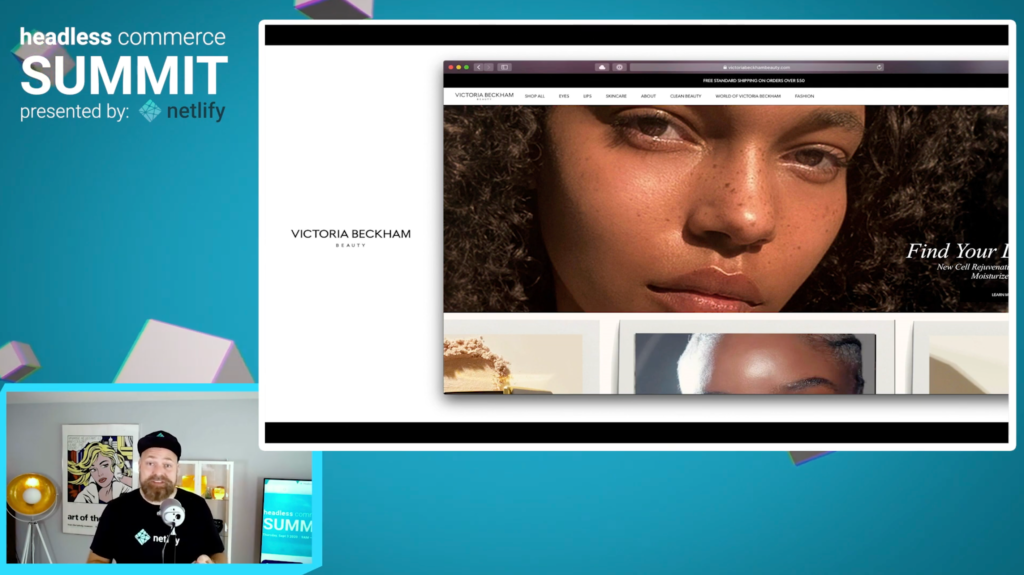
The second example is Victoria Beckham Beauty, a headless design that improves your UX until you check out. Other fashion brands who benchmarked the brand wanted to know why it was so fast.
56% of Companies Consider Adopting Headless Commerce
Headless commerce separates the front end from the back-end, and the benefits of this are described below.
- Site Performance (Display Speed)
- The Flexibility of Features brought by Microservices
- content integration
- improvement in development efficiency
- speeding up testing
- security
- personalization
A traditional, non-headless monolithic architecture is:Every feature in a single system.
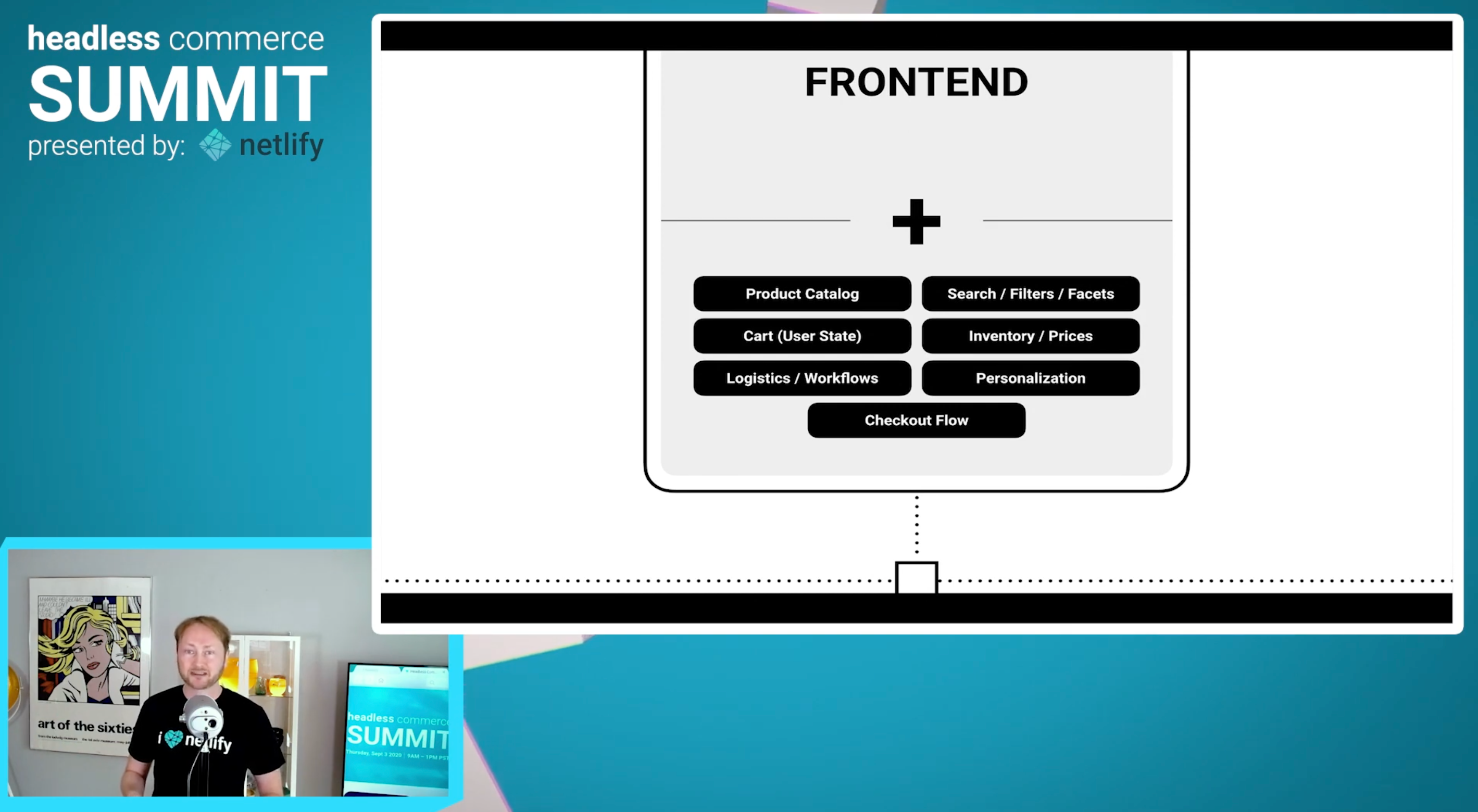
On the other hand, headless architectures can also be implemented as follows:
Choosing the best technology for your user experience, you can create a site that combines different systems in a microservices fashion: CMS, logistics, carts and search.
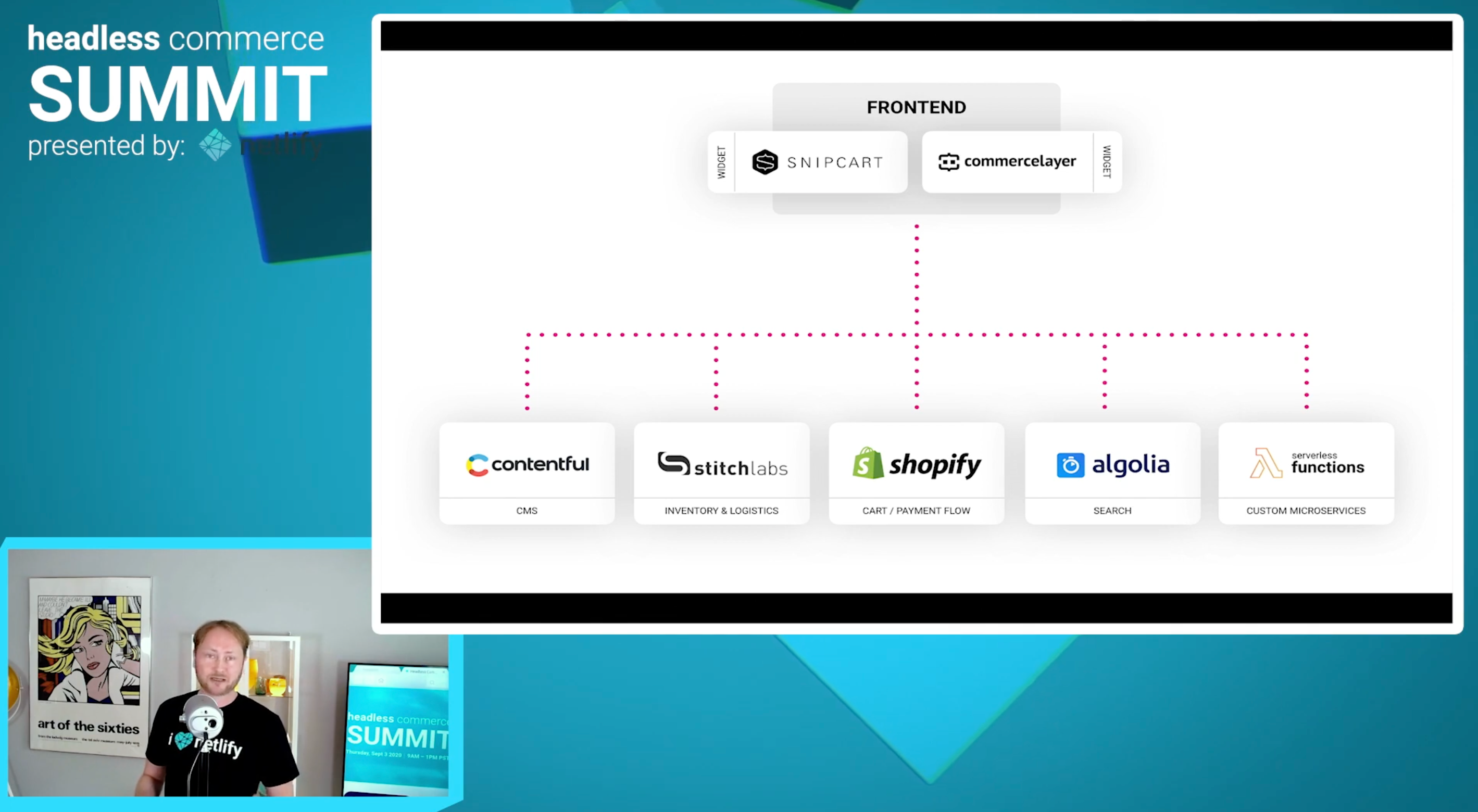
According to Gartner, 56 percent of companies are considering headless systems because they have a higher conversion rate and better developer experience.
How Jamstack works and benefits
The headless Jamstack architecture allows for a high-performance site by doing the build process.
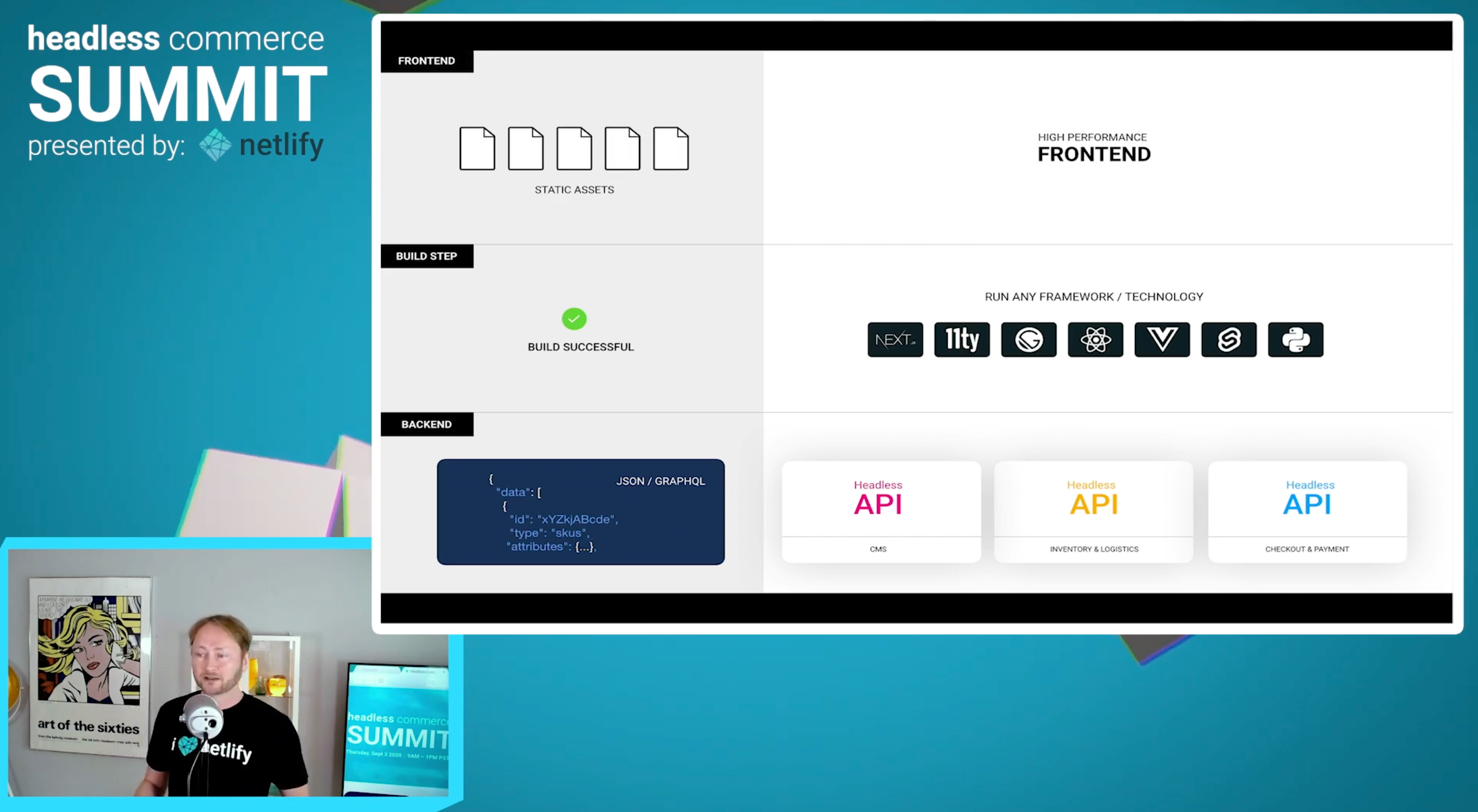
Developers build using frameworks like Next, Gatsby and so on, and static content is delivered to CDNs around the world.
By creating a page in advance at the time of building, it is possible to achieve high performance by greatly shortening the time required for processing on the server side when displaying pages.
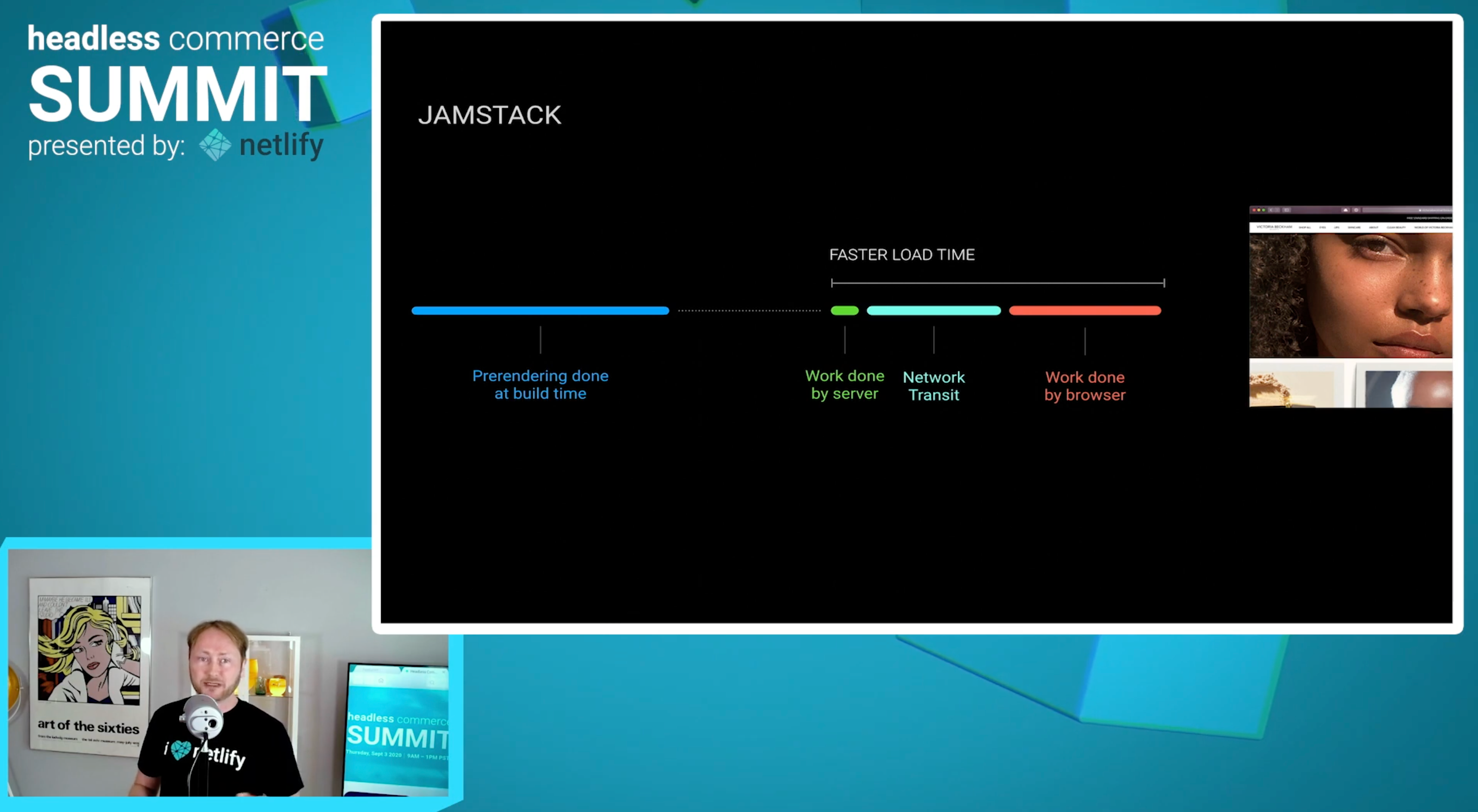
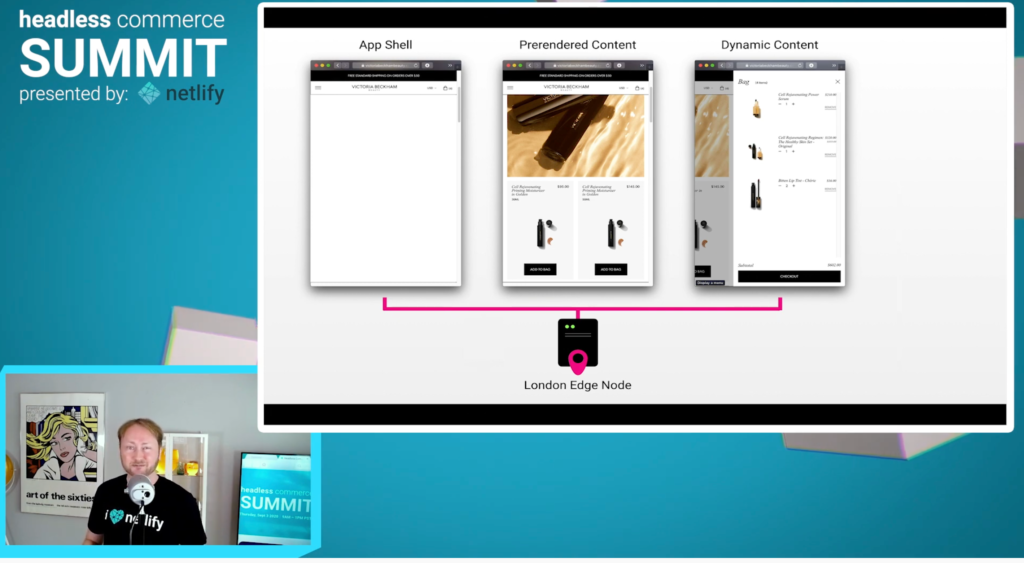
Dynamic content is now being built like SPA (single-page application), but in the future it will be possible to personalize directly on CDN edge nodes.
This was an easy-to-understand keynote with examples of the outlines and benefits of headless commerce. In our next article, we will report a session on Shopify-powered headless commerce.
* Archived video: https://youtu.be/s3hDghdIiFY