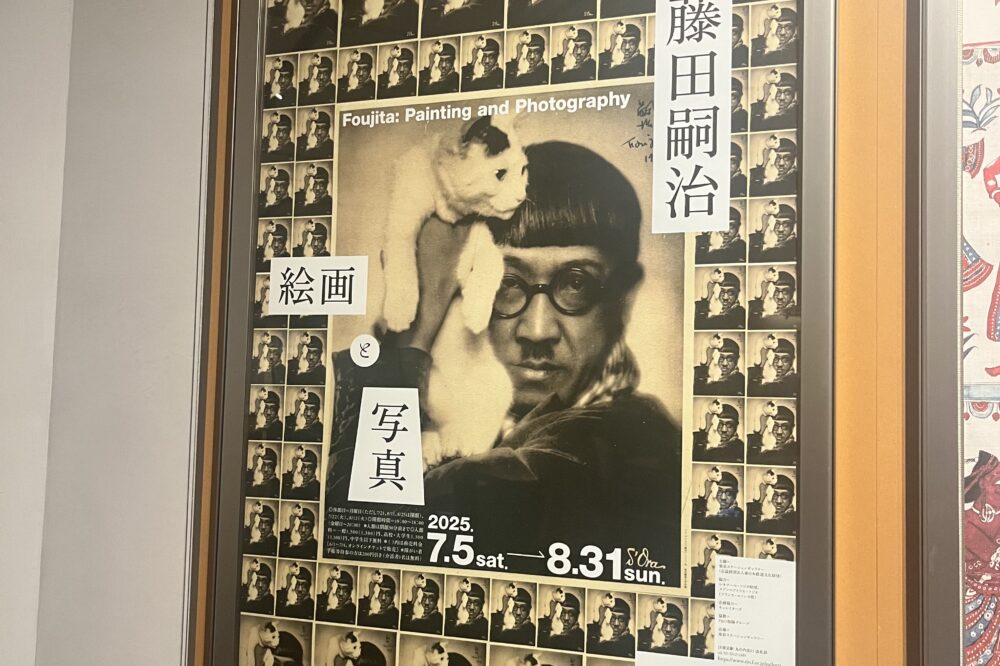
Drawing is seeing: Visiting “Tsuguharu Foujita: Painting and Photography” with our arts appreciation allowance

Hi. I'm a designer.
and our company said, Art appreciation allowance There is an in-house system known as “Don’t do it.
It is said that it supports staff's art appreciation (painting, music, movies, theater and dance) on the condition of writing a blog after viewing with an upper limit of 5,000 yen per month.
This time, I went to the Tokyo Station Gallery until August. Paintings and Photography That's it.
Oral and rounded hair on the head of a porridge -- A painter who played an active role in France during the 1920s, Junji Fujita
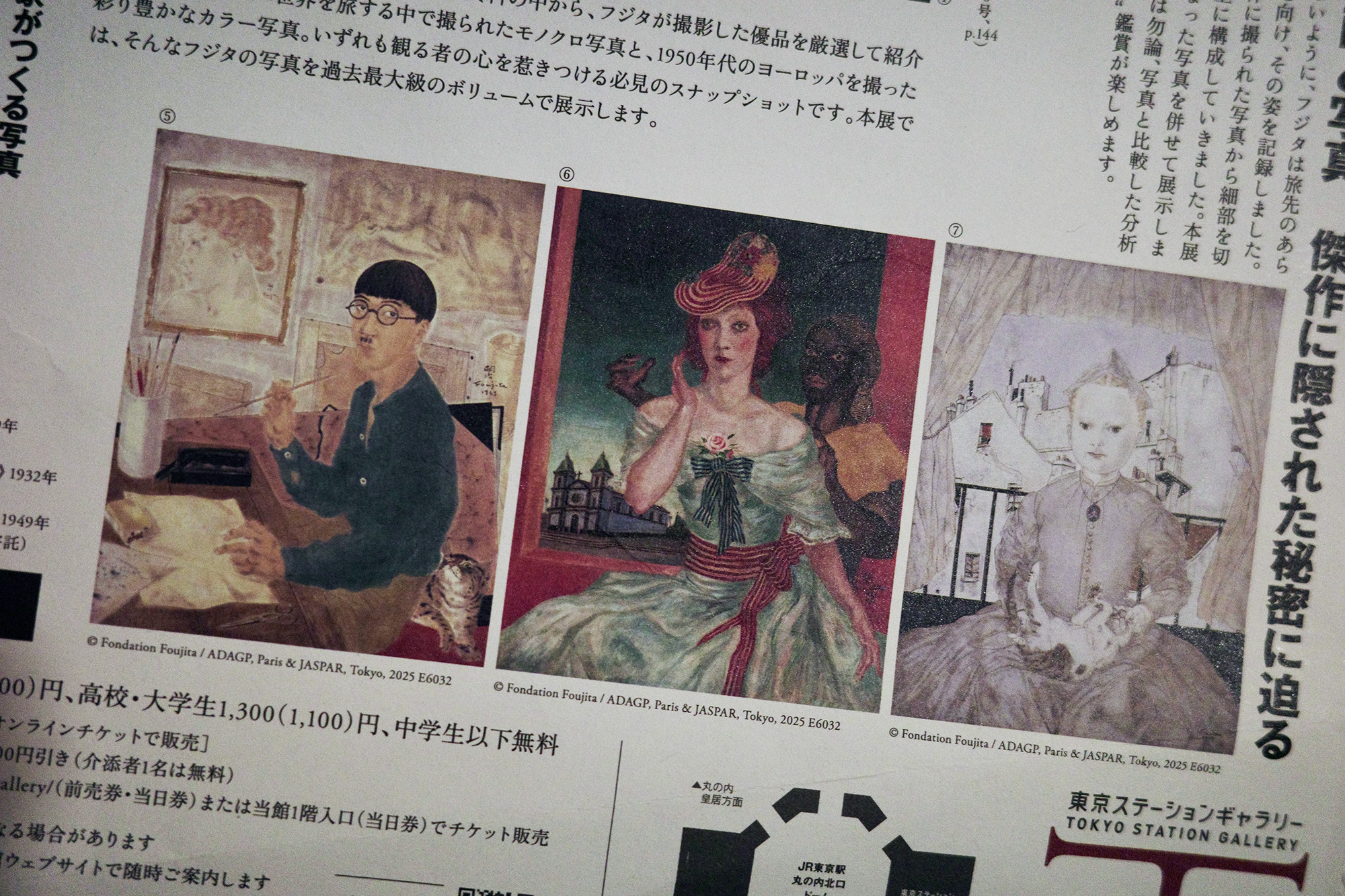
fujita hiroji, painting and photography from leaflets.
Junji Fujita (1886 – 1968) was a Western-style painter born in Tokyo and active in Paris.
It is known for its "milk-white skin" naked woman statue and self-portrait of a cat, and the technique to draw objects with delicate black contours is famous.
As a Japanese at that time, it was quite unique in appearance: mustaches, round glasses, piercings and tattoos on the head of his head.It was nicknamed “FouFou” and its popularity was so popular as to make mannequins imitating him.
Fujita Koji Painting and Photography” is an exhibition that reconsiders Fujita’s art with “photography” as its keyword.
He travelled with a small camera such as Leica, and used the photograph as references for painting materials and composition.
The exhibition consists of three chapters: “painter made in painting and photography”, “picture created by photography” and “photograph made by painter”.
Drawing, and photographing: an exhibition that follows the “trajectory of eyes” between two acts (Reference: Koji Fujita Paintings & Photography Collection/Exhibition Site).
What Fujita's "eye" was capturing
Before the contents of the exhibition, I was very interested in the key visuals of the exhibition.
I thought that he had the power to stop everyone's feet because his design was lined up with portraits of cats looking at me.
However, I was not a special fan of him, but rather felt like an understanding of his strong image.
What I felt so strong when I went to the exhibition with a flat feeling was that it is very simple and good at painting and photography with a solid foundation.
Up until now, I have focused on drawing and painting methods and was impressed by the geniuses of my skin. But this time after chasing each one carefully, I realized that the balance between compositions and drawing is very polite as well.
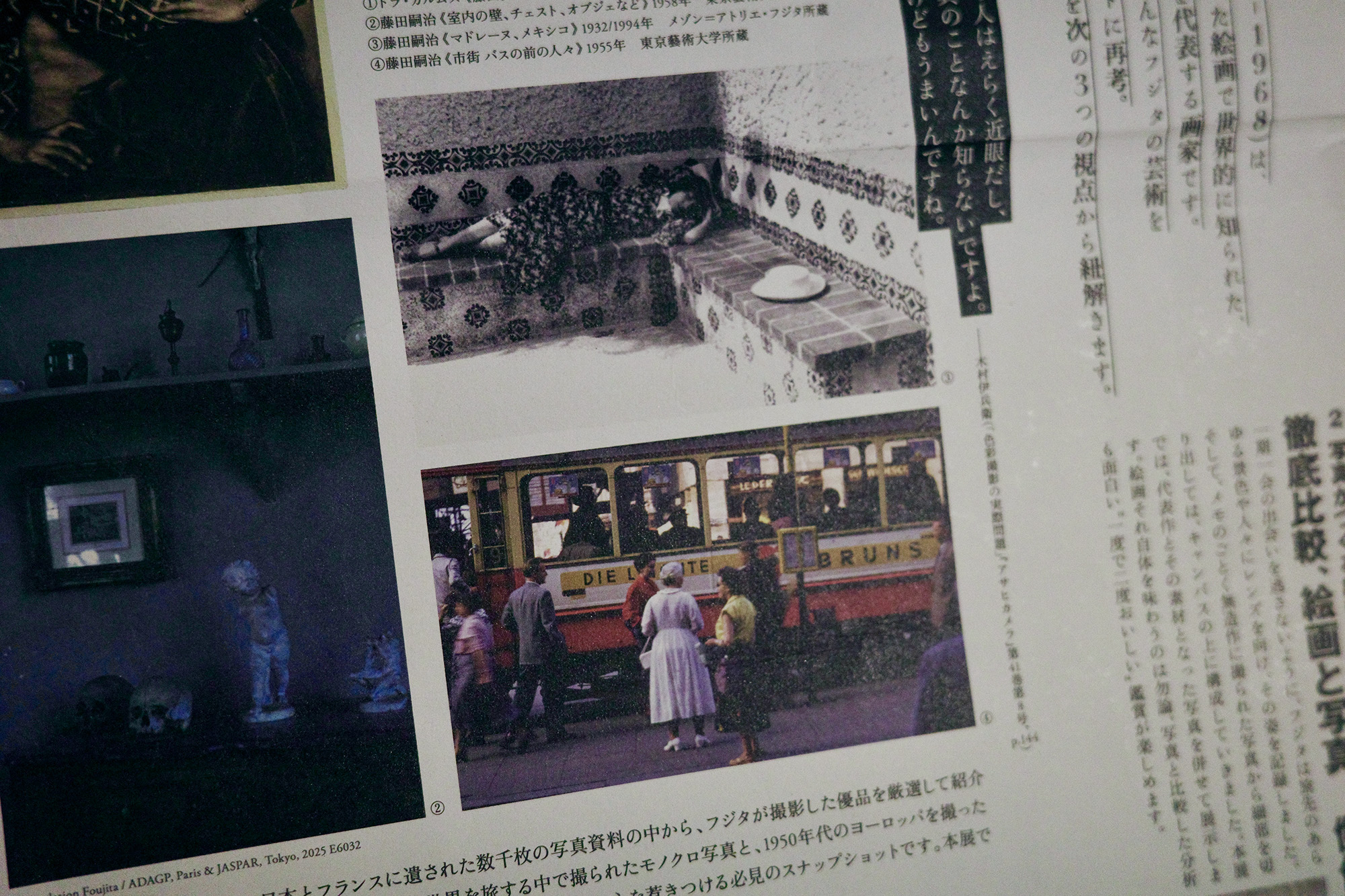
Fujita used his photographs to separate them from the original and turn them into paintings. In doing so, he approached his friend Henri Matisse's. Mattiss said: "The duty of a painter is to give something that no photograph gives."
He didn’t appear to be presenting photos as art, but many things were cut out that made him feel familiar and nostalgic.
Even so, it seems that the photograph was in the stage of seeing one in the work making, and I felt amazing how many times there were attempts to see what this person looked like in the world.
I think it was because of the focus on the trajectory to see, that I felt something like muddyness which had not been felt by him until now.
To draw is to see.
Since it was an exhibition with the theme of “seeing”, I suddenly remembered when I was painting in high school.
It was taught by an advisor of the art department that “what I draw is to see”.
I was taught not only to watch but also touch motifs when drawing, and that the time spent watching is longer than drawing.
At the time, I intended to understand the meaning of that word, but when I saw this exhibition, I recalled that I was not able to pursue seeing.
I think it's time to take a closer look at the unknown and also face your own bad points.
It is also one of my abilities, but I think that I was facing each other with the premise that it would be troublesome to see somewhere and stop or not draw like a person who is good at painting.
I am very scared, but seeing his work and following the trajectory, my feeling of regret has risen.
It's because I wonder if anyone can see it.
In design, I feel that it is very important to see with your own eyes, head and mind in any job or even life.
I was greatly inspired by my desire to stack up as much of what I could do now, “seeing”.